
Category

Understanding Lipodema: More Than “Just Weight Gain”
Lipodema is a chronic condition that is frequently misunderstood or misdiagnosed. Many people living with lipodema are told their symptoms are due to weight gain or lifestyle factors, when in fact lipodema is a recognised medical condition that affects fat distribution, tissue health, and comfort.
Understanding lipodema is an important first step toward appropriate support and long-term management.
What Is Lipodema?
Lipodema is a long-term condition characterised by an abnormal and disproportionate accumulation of fat, most commonly affecting the hips, thighs, legs, and sometimes the arms. It almost exclusively affects women and often develops or worsens during periods of hormonal change such as puberty, pregnancy, or menopause.
Unlike general weight gain, lipodema fat is typically resistant to diet and exercise and is usually symmetrical, affecting both sides of the body equally. The hands and feet are usually unaffected.
Lipodema Stages Explained
Lipodema may progress over time; however, presentation varies significantly between individuals. Some people experience gradual changes over many years, while others notice changes more rapidly, particularly during periods of hormonal fluctuation.
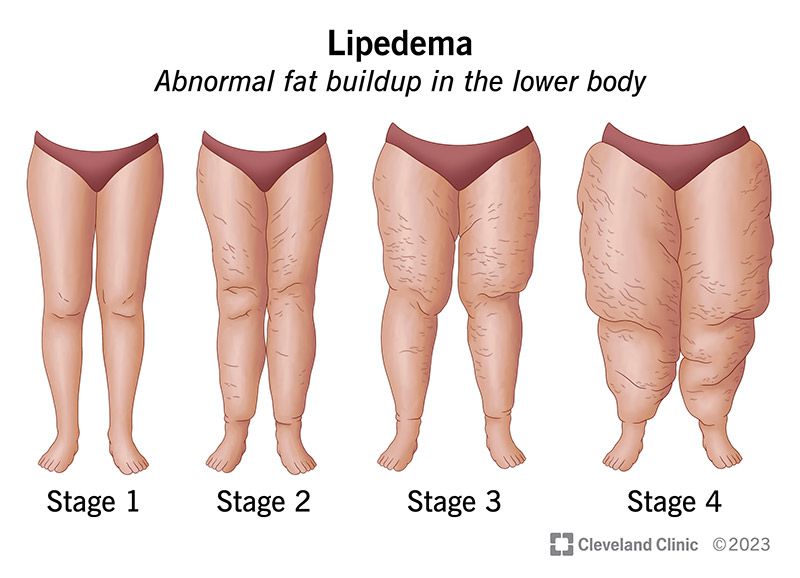
Lipodema can present differently between individuals and may progress over time. Not everyone experiences all stages, and symptoms do not always correlate directly with appearance.
Overview of Commonly Described Stages
-
Stage 1
The skin surface often appears smooth, with early changes in fat tissue beneath the skin. Pain, tenderness, and easy bruising may already be present, even when visible changes are subtle. -
Stage 2
Fat tissue becomes more uneven, and a nodular or “mattress-like” texture may develop. Discomfort, heaviness, and sensitivity to pressure are commonly reported. -
Stage 3
More pronounced contour changes may affect mobility, endurance, and daily activities. Pain and swelling are often more noticeable. -
Stage 4
Lipodema may coexist with secondary lymphoedema, resulting in additional swelling and increased management needs.
An Important Note on Staging
Staging is a descriptive tool only. It does not determine pain levels, functional impact, or quality of life. Some people with early-stage lipodema experience significant symptoms, while others at later stages may have different priorities or goals.
Assessment should always focus on symptoms, function, and individual needs, rather than appearance alone.
Why Does Lipodema Occur?
The exact cause of lipodema is not fully understood; however, it is thought to involve a combination of hormonal and genetic factors. Many people with lipodema report a family history of similar body shape or symptoms.
Changes within fat tissue and small blood vessels can contribute to inflammation, pain, and increased sensitivity. Over time, lymphatic function may also be affected, increasing the risk of swelling and secondary lymphoedema.
Common Signs and Symptoms
People with lipodema may experience:
-
Disproportionate fat accumulation in the legs, hips, or arms
-
Pain, tenderness, or sensitivity to pressure
-
Easy bruising
-
A feeling of heaviness or aching in the limbs
-
Swelling that worsens throughout the day
-
Difficulty with endurance, standing, or walking
-
Symptoms that do not respond to diet or exercise
Symptoms vary between individuals and may progress over time.
Printable Checklist for GP Appointments
If you suspect lipodema, preparing for a discussion with your GP can be helpful.
A one-page printable checklist is available to support this conversation. It outlines common lipodema symptoms and includes information for GPs regarding referral to occupational therapy under a Chronic Disease Management (CDM) Plan, where eligible.
👉 Download the Lipodema Symptom Checklist (PDF)
Take this checklist to your GP appointment.
Lipoedema_Symptom_Checklist_One_Page_Occupational_Therapy_with_Helen (2)
This checklist is provided for general information and patient education only and does not provide a diagnosis.
How Is Lipodema Different From Lymphoedema or Obesity?
Although these conditions can coexist, they are different:
-
Obesity involves generalised fat accumulation and typically responds to weight-loss strategies
-
Lymphoedema is caused by impaired lymphatic drainage and usually includes swelling of the feet or hands
-
Lipodema involves painful, resistant fat tissue and typically spares the hands and feet
Accurate assessment is important to guide appropriate management.
How Can Occupational Therapy Help?
While lipodema cannot be cured, occupational therapy can play an important role in symptom management and functional support.
Management may include:
-
Individualised assessment and goal setting
-
Education and self-management strategies
-
Support with pacing, movement, and daily activities
-
Compression strategies, where appropriate
-
Manual techniques to support tissue comfort and mobility
-
Adjunct therapies such as LPG Endermologie® vacuum massage, where clinically appropriate
Treatment is tailored to the individual and often works best when combined with consistent self-management strategies.
What to Expect From Management
Lipodema management focuses on long-term support rather than quick fixes. Many people notice improvements in comfort, heaviness, and daily function with consistent strategies over time. Progress varies between individuals, and ongoing review helps ensure management remains appropriate as needs change.
When to Seek Professional Support
If you experience persistent pain, swelling, bruising, or changes in tissue that do not respond to lifestyle measures, professional assessment can help clarify what may be contributing to your symptoms and guide suitable management options.
Early recognition and support may help reduce symptom progression and improve quality of life.
A Final Thought
Living with lipodema can be physically and emotionally challenging, particularly when symptoms are misunderstood. With appropriate information, supportive care, and individualised management, many people find meaningful ways to improve comfort, function, and confidence.
Considering Support?
If you would like personalised assessment or support for managing lipodema, you’re welcome to book an initial consultation at Occupational Therapy with Helen.
👉 Book an Appointment Online
https://book.nookal.com/bookings/book/181b1A4a-f1Ac-1B4f-4222-3fd0bAFAEBAf
No referral is required for private appointments. Sessions are individualised to your needs and goals.